
Ask most homeowners which part of their house is easiest to break into and they will name the back door or the patio slider. Very few name the basement windows. That is part of why they get used.
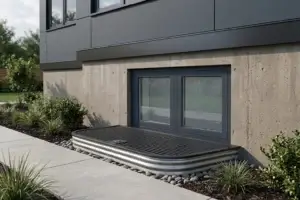
Basement windows sit low to the ground, are often hidden behind shrubs or in window wells, and usually have the thinnest glass and weakest latches in the house. In Toronto, where many older homes have original basement windows and more homeowners are adding basement apartments, they deserve more attention than they get.
Quick Answer: How Do You Secure Basement Windows?
Secure basement windows by upgrading the latches, lighting and clearing the area around them, adding sensors to your alarm, and replacing or reinforcing the glass so it cannot be broken through quickly. For any basement window that serves as a required emergency exit, every security measure has to leave the window able to open fully from the inside without keys or tools.
Why Basement Windows Are Targeted
They are out of sight
A person crouched at a basement window is below fence height and often hidden by landscaping. Neighbours and passing cars are unlikely to notice.
The hardware is basic
Many basement windows in GTA homes use simple cam latches or sliding sashes that can be forced with a flat tool, and the glass is often single pane or thin.
They lead to quiet parts of the house
Basements are usually empty at night. Someone can get in, then move upstairs without passing a bedroom.
This is not a theoretical risk. During a spike in break-ins across Forest Hill, Leaside and Lawrence Park, one resident described an intruder crawling through a basement window at 3 a.m. while her family was asleep. A motion detector went off and he left within seconds, but he was already inside.
The Rule You Cannot Ignore: Egress
Before securing any basement window, check whether it is a required emergency exit. Under the 2024 Ontario Building Code, every floor level that contains a bedroom must have a way out in an emergency, either a door directly to the outside on that level or a window that meets egress requirements. In a basement with a bedroom or a basement apartment, that is often a window.
An egress window has to open from the inside without keys, tools or special knowledge, and provide a clear opening large enough for a person to get out. Where it opens into a window well, the Code also requires clear space in front of it.
That rules out a lot of common fixes. Fixed bars, screwed-shut sashes and keyed locks can make a basement window unusable in a fire. Any security upgrade on an egress window has to keep it fully operable.
How to Secure Basement Windows, Step by Step
- Identify which windows are egress windows. Treat any window in a basement bedroom, or the only window that could serve a basement suite, as an emergency exit.
- Upgrade latches. Replace basic cam latches with stronger locking hardware that still opens by hand from inside.
- Clear the sightlines. Trim shrubs so basement windows are visible from the street or yard.
- Light the area. A motion light that covers basement windows and window wells removes the cover darkness provides.
- Add window sensors and glass break detection. Make sure basement windows are on your alarm, not just main-floor doors.
- Cover window wells. A rigid well cover keeps debris out and adds a step for anyone trying to get in. On egress windows, use a cover that opens easily from below.
- Strengthen the glass. Latches, lights and sensors help, but glass is still what most intruders break. Impact-resistant glazing removes that option.
Strikeglass for Basement Windows
Strikeglass residential security glazing is designed to resist repeated impacts from hammers, crowbars and similar tools. Because it is bonded onto the existing glass, the window works the way it always has. On an egress window, that matters: the glass becomes hard to break from outside, while the window still opens normally from inside.
It also avoids the look of bars or grilles, which many homeowners do not want on a finished basement or a rental unit. During your assessment, we confirm which windows are egress windows and make sure the installation keeps them fully operable.
Basement Apartments and Rental Suites
If you rent out a basement unit, its windows protect your tenant as well as your property. Basement suites are often empty during the day while tenants work, and the windows are usually the only glass in the unit. Securing them is a practical way to reduce risk for both of you, and keeping egress windows operable is required under the Code.
Frequently Asked Questions
Can I put bars on my basement windows in Ontario?
Fixed bars on a window that serves as a required emergency exit can prevent escape in a fire. If you use any covering on an egress window, it has to open easily from the inside without keys or tools. Glass-based security avoids the issue because the window still opens normally.
How do burglars get in through basement windows?
Most force a weak latch or break the glass. Because basement windows are low and often hidden by landscaping or window wells, this can be done without being seen.
Do basement windows need to be on my alarm system?
Yes. Many systems only cover main-floor doors. Adding contact sensors and glass break detectors to basement windows closes a common gap.
What is an egress window?
An egress window is a window large enough and easy enough to open that a person can use it to escape in an emergency. The Ontario Building Code sets minimum requirements for egress windows serving floor levels with bedrooms.
Will Strikeglass stop my basement window from opening?
No. Strikeglass is installed on the existing window, so operable windows continue to open and close as before.