
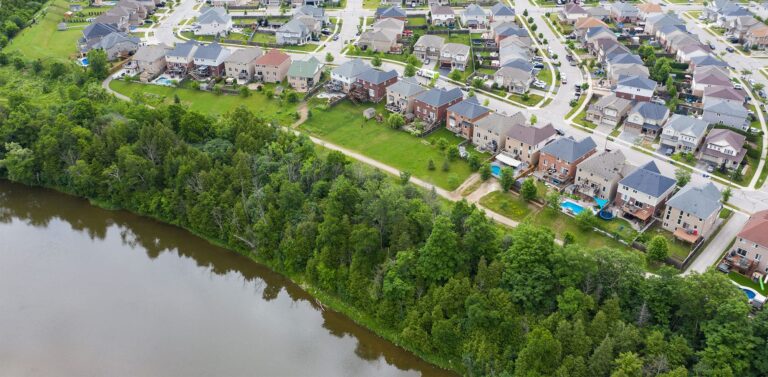
A home that backs onto a ravine, trail or park is one of the most sought-after properties in the GTA. No rear neighbours, mature trees, privacy and a view that does not change. Toronto alone has one of the largest urban ravine systems in the world, and the City of Toronto’s ravine strategy describes it as a defining feature of the city.
The same features that make these lots attractive to buyers also make them attractive to break-in crews. Police in the GTA have started saying so directly.
Quick Answer: Are Homes Backing Onto Green Space at Higher Risk?
Yes. Halton Regional Police have reported that homes backing onto or near trail systems and green spaces are being specifically targeted for break-ins. Thieves use the trail to approach unseen, enter by smashing a rear door or window, and leave the same way. Because there are no rear neighbours to notice, the back of the house is the most exposed part of the property.
What Police Are Seeing
In an advisory reported by CTV News, Halton police said investigators had noticed that homes near trail systems and green spaces were being targeted by organized groups. The details are consistent across cases:
- Most break-ins happened between 5 p.m. and 10 p.m., after dark and while homes were empty.
- Entry was made by smashing rear doors or windows with tools.
- Suspects wore dark clothing, gloves and face coverings and carried backpacks, which let them blend in with people using the trails.
- They searched for cash, jewellery, luxury goods and government ID, then left within minutes.
The advisory came from Halton, but the same lot types exist across Toronto, Mississauga, Oakville, Vaughan, Richmond Hill and Markham.
Why the Back of a Ravine Lot Is the Weak Point
No one is watching
On a typical street, the back of your house faces another house. Someone in a neighbouring kitchen might notice a stranger in your yard. On a ravine or park lot, that line of sight does not exist.
The approach looks normal
A person walking a trail at dusk with a backpack does not draw attention. That is the cover these groups rely on.
Ravine homes are built around glass
Owners pay for the view, so the rear of these homes usually has the most glass on the property: walkout patio doors, floor-to-ceiling windows, walkout basements and sunrooms. Standard glass in those openings breaks in seconds.
Fences often stop at the property line
Many ravine lots have low fences or none at all because of conservation rules or to keep the view open. That removes an obstacle most homes rely on.
How to Secure a Home That Backs Onto Green Space
Ravine lot security works best when it focuses on the rear of the property rather than the front door.
- Light the rear yard. Motion-activated lighting on the back of the house and along side passages removes the darkness that trail approaches depend on. Aim fixtures at the house, not into the ravine, to limit glare for neighbours and wildlife.
- Point a camera at the yard, not just the door. A camera that covers the approach from the trail gives you warning and gives police useful footage.
- Lock gates and secure walkout doors. Add secondary locking hardware to sliding patio doors and confirm walkout basement doors lock properly.
- Make the house look occupied after dark. Interior lights on timers in rooms visible from the yard matter more on these lots than lights at the front.
- Protect the rear glass itself. Every other step reduces the chance of being chosen. This step decides whether someone who tries can actually get in.
Protecting the View Without Giving Up Security
Owners of ravine homes often resist security upgrades because they do not want bars, shutters or heavy hardware blocking the view they paid for. That concern is reasonable, and it is why glazing is the right layer for these properties.
Strikeglass residential security glazing is clear, bonded onto the existing glass and built to resist repeated impacts from hammers, pry bars and similar tools. From inside the house, the view stays the same. From the trail, a thief sees ordinary windows. The difference only shows when someone tries to break through.
On a ravine lot, the openings we prioritize are:
- Rear sliding and French patio doors
- Walkout basement doors and windows
- Large rear-facing windows on the ground floor
- Sunroom and solarium glass
Frequently Asked Questions
Do homes backing onto ravines have higher break-in rates?
GTA police have reported that homes backing onto trails and green spaces are being specifically targeted, because thieves can approach and leave through the green space without being seen from the street.
How do thieves get into homes that back onto trails?
Police describe thieves approaching from the trail, then smashing a rear door or window to get in. Rear patio doors and large ground-floor windows are the most common entry points.
Can I add a fence to a ravine lot in Toronto?
It depends on your property. Many ravine lots fall under Toronto’s ravine and natural feature protection rules or conservation authority regulations, which can restrict fencing and tree removal. Check with the City of Toronto or your local conservation authority before building.
Will security glass block my view?
No. Strikeglass is clear and is bonded onto your existing glass, so the view and natural light stay the same.
What is the most important security upgrade for a ravine lot?
Securing the rear glass. Lighting and cameras help deter and detect, but the rear doors and windows are where entry actually happens on these properties.